

Winter is a beautiful time of year, but snow and ice can turn sidewalks and driveways into dangerous obstacle courses. As a chiropractor, I see too many injuries caused by winter slips and falls—most of which could have been prevented with a little preparation. That’s why I’ve put together this guide to help you prevent slips and falls on ice and stay safe, steady, and upright this winter season.

1. Choose the Right Footwear: Boots That Mean Business
Your shoes can make or break your stability on icy surfaces. Investing in the right pair of boots can save you from an unpleasant tumble.
What to Look For in Winter Boots: Suggestions for the Best Winter Boots In Canada!
- Non-Slip Soles: Deep treads and rubber soles provide traction on snow and ice.
- Insulation: Warm boots help keep your feet cozy and functional (cold, numb feet = poor balance).
- Waterproofing: Dry feet are happy feet!
Top Picks for Winter Boots:
- Columbia Women’s Ice Maiden II Snow Boot
- Sorel Men’s Caribou Waterproof Boot
- Kamik Women’s Momentum Snow Boot
- The North Face Men’s Chilkat 400 II Insulated Boot
- Merrell Women’s SIREN 4 THERMO MID ZIP WP Winter Boot
2. Boost Your Traction: Add Ice Cleats or Spikes
If your regular boots don’t cut it, consider adding traction aids. Ice cleats or spikes attach to your shoes and can give you the grip you need to prevent slips and falls on ice. The Canadian Red Cross offers their tips for Slips, trips and falls: How to stay safe in icy weather.
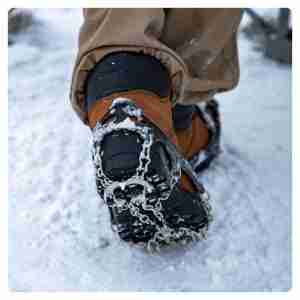
Popular Traction Aids:
- Yaktrax Walk Traction Cleats: Lightweight and easy to use, these cleats provide 360-degree traction with steel coils, fitting over most shoes and boots for safe walking on ice and snow.
- STABILicers Walk Traction Cleats: Featuring multi-directional steel cleats, these durable traction aids offer excellent grip and are easy to attach to various footwear types.
- Kahtoola NANOspikes Footwear Traction: Best for icy winter pathways and roads. 10 concave tungsten carbide spikes per foot grab instantly for a sticky feeling on ice.
- Kahtoola MICROspikes Footwear Traction: Ideal for more rugged conditions, these spikes offer a secure fit with 12 stainless steel spikes per foot, ensuring stability on ice and packed snow. Great for hiking and exceptionally icy pathways.
These handy tools are lightweight, easy to carry, and a game-changer for anyone navigating icy conditions.
3. Master the Art of Safe Walking
Walking on ice isn’t the same as strolling in the park—adjust your technique for better stability and to prevent slips and falls on ice.
- Take Small Steps: Keep your center of gravity over your feet to maintain balance.
- Use Your Arms: Let your arms swing naturally, or keep them out slightly for added stability.
- Watch Your Path: Stay alert for black ice, uneven surfaces, or hidden obstacles.
- Keep Hands Free: Avoid carrying heavy items; if needed, use a backpack to keep your hands available for balance.
4. Prepare Your Environment
Your home and surroundings play a big role in winter safety. Here are some steps to make your environment safer:
- Clear Walkways Regularly: Shovel snow promptly and use salt or sand to reduce ice buildup.
- Install Handrails: Make sure stairs and ramps have secure handrails for extra support.
- Brighten Your Path: Adequate outdoor lighting can help you spot hazards more easily.
5. Stay Strong and Balanced
Your overall fitness and balance are crucial for fall prevention. Regular exercise that focuses on strength and stability can make all the difference in helping you prevent slips and falls on ice.
Exercises to Try:
- Core Workouts: Planks, bridges, and bird dogs can improve core stability.
- Leg Strengthening: Squats, lunges, and step-ups keep your lower body strong.
- Balance Drills: Standing on one foot or using a balance board can enhance coordination.
6. Consult a Chiropractor
Did you know that regular chiropractic care can help you maintain better alignment, balance, and mobility?
- Improved Stability: Chiropractic adjustments ensure your spine and joints are functioning at their best, reducing the risk of falls.
- Faster Recovery: If you’ve experienced a fall, chiropractic care can help your body heal and recover faster.
- Customized Advice: A chiropractor can provide personalized tips for improving your posture and balance year-round.
7. Bonus Tips for a Fall-Free Winter
- Go Hands-Free: Carry a backpack to keep your arms available for balance.
- Be Patient: Slow down! Rushing increases your risk of slipping.
- Use Support: Don’t be shy about using handrails or asking for assistance when navigating slippery areas.
Winter doesn’t have to mean a season of slips and falls. With the proper footwear, traction aids, and safety habits, you can confidently enjoy the beauty of the season and prevent slips and falls on ice. And don’t forget—regular chiropractic care is your secret weapon for staying balanced and resilient, no matter what winter throws your way.
If you’re ready to take control of your winter safety and spine health, schedule a consultation with your chiropractor today. Let’s keep you steady and strong all season long!